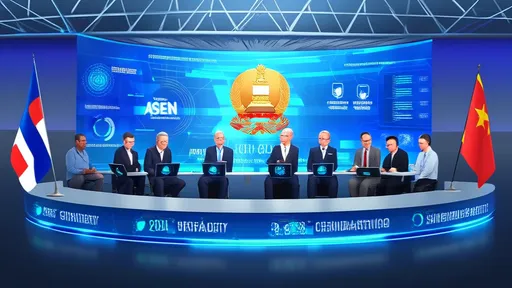
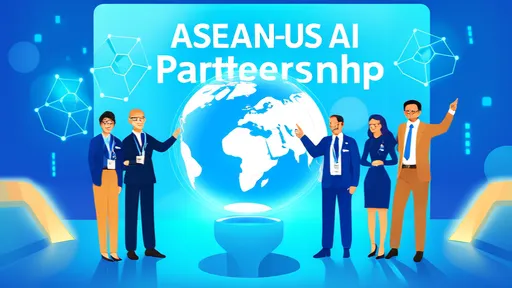
The Association of Southeast Asian Nations (ASEAN) and the United States have embarked on a landmark collaboration in artificial intelligence (AI), signaling a strategic pivot toward policy harmonization and human capital development. This partnership emerges against a backdrop of rapid technological transformation and intensifying global competition, with both regions recognizing AI's potential to reshape economies, security architectures, and societal frameworks. The cooperation is not merely a technical exchange but a concerted effort to build a shared understanding of AI's opportunities and risks, ensuring that its evolution is guided by principles of inclusivity, security, and sustainable growth.
At the heart of this initiative is a focus on crafting coherent and interoperable AI policies. ASEAN member states, with their diverse legal systems and economic development levels, face the complex challenge of creating regulatory environments that foster innovation while mitigating risks such as data privacy breaches, algorithmic bias, and threats to democratic processes. The United States, with its extensive experience in AI governance and a thriving tech ecosystem, is positioned to offer valuable insights and support. The collaboration aims to facilitate dialogues that help align ASEAN's regulatory approaches with international norms, reducing barriers to cross-border data flows and digital trade.
Policy development efforts are concentrating on several key areas, including data protection standards, ethical AI guidelines, and cybersecurity protocols. By establishing common frameworks, the partnership seeks to prevent a fragmented regulatory landscape that could hinder regional integration and economic cooperation. For instance, discussions are underway about adopting core principles similar to those in the US National AI Initiative, tailored to ASEAN's unique socio-cultural context. This includes emphasizing human-centric AI that respects fundamental rights and promotes transparency in automated decision-making systems.
Simultaneously, the human capital component of the ASEAN-US AI cooperation is gaining significant traction. There is a growing recognition that technological advancement is meaningless without a skilled workforce to drive it. The partnership is therefore prioritizing education and training programs designed to equip ASEAN citizens with the competencies needed to thrive in an AI-driven economy. This involves curriculum development, vocational training, and higher education collaborations that span from foundational digital literacy to advanced AI research.
One of the most promising aspects of this collaboration is its emphasis on inclusivity and accessibility. Efforts are being made to ensure that AI education reaches underrepresented groups, including women, rural communities, and people with disabilities. Scholarship programs, online learning platforms, and train-the-trainer initiatives are being deployed to democratize access to AI knowledge. The goal is to cultivate a diverse talent pool that can contribute to and benefit from the AI revolution, thereby reducing inequality and fostering social cohesion.
Moreover, the partnership is fostering innovation ecosystems through academic and research exchanges. Joint projects between US and ASEAN universities are exploring cutting-edge AI applications in areas like healthcare, agriculture, and climate change. These collaborations not only advance scientific knowledge but also create practical solutions to pressing regional challenges. For example, AI-powered diagnostic tools for tropical diseases and predictive models for natural disaster management are already showing promise, illustrating the tangible benefits of cross-border knowledge sharing.
The geopolitical dimensions of this cooperation cannot be overlooked. As China aggressively promotes its own AI standards and technologies through initiatives like the Digital Silk Road, the ASEAN-US partnership offers a complementary vision rooted in open markets, multilateralism, and democratic values. By working together, ASEAN and the US aim to create a counterbalance to techno-authoritarian models, ensuring that the future of AI development remains aligned with principles of freedom, accountability, and respect for human rights.
However, the path forward is not without obstacles. Differences in regulatory philosophies, intellectual property rights regimes, and data localization requirements could pose challenges to seamless integration. Additionally, concerns about technological dependency and the potential for AI to exacerbate existing digital divides require careful navigation. The partnership must be grounded in mutual respect and a genuine commitment to co-creation, rather than a one-way transfer of knowledge and systems.
Looking ahead, the success of the ASEAN-US AI collaboration will depend on sustained engagement and adequate resourcing. Both sides need to invest not only in financial terms but also in political capital to overcome bureaucratic hurdles and institutional inertia. Regular high-level meetings, working groups, and public-private partnerships will be crucial to maintaining momentum and ensuring that agreed-upon initiatives are effectively implemented.
In conclusion, the ASEAN-US focus on AI policy and talent development represents a forward-looking strategy to harness technological progress for collective prosperity and stability. By building robust governance frameworks and nurturing human capabilities, this partnership has the potential to set a global benchmark for responsible and inclusive AI development. As AI continues to redefine the boundaries of what is possible, such cooperative efforts will be essential to navigating the complexities of the digital age and shaping a future that benefits all of humanity.

By /Oct 21, 2025

By /Oct 21, 2025

By /Oct 21, 2025

By /Oct 21, 2025

By /Oct 21, 2025

By /Oct 21, 2025
By /Oct 21, 2025

By /Oct 21, 2025

By /Oct 21, 2025

By /Oct 21, 2025

By /Oct 21, 2025
By /Oct 21, 2025

By /Oct 21, 2025

By /Oct 21, 2025

By /Oct 21, 2025

By /Oct 21, 2025

By /Oct 21, 2025

By /Oct 21, 2025

By /Oct 21, 2025

By /Oct 21, 2025