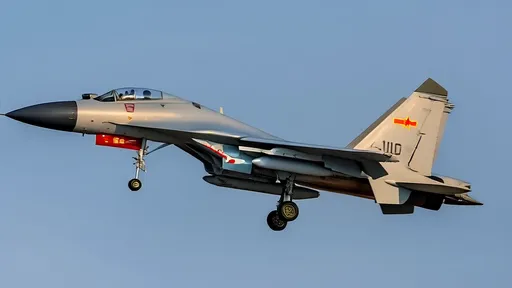
In an era where global defense budgets face increasing scrutiny, nations with limited military expenditure constantly seek platforms delivering maximum operational value. The Chengdu J-10C fighter jet emerges as a compelling solution, blending advanced capabilities with remarkable cost-effectiveness that challenges Western counterparts in both performance and affordability.
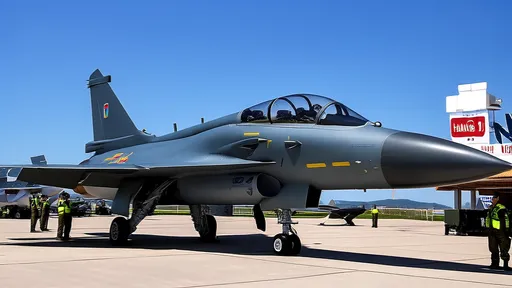
The J-10C represents China's sophisticated approach to modern aerial warfare, incorporating technologies that place it firmly within the fourth-plus generation fighter category. Its design philosophy centers on delivering high performance without the exorbitant costs typically associated with comparable Western aircraft. For countries navigating the delicate balance between national security requirements and fiscal constraints, this Chinese-made fighter presents an attractive proposition that merits serious consideration.
Aerodynamic Excellence Meets Modern Warfare Demands
At the core of the J-10C's appeal lies its carefully optimized design that balances performance with practical considerations. The aircraft features a delta wing configuration with canards, providing exceptional maneuverability across various flight regimes. This aerodynamic arrangement enables the fighter to maintain energy during complex combat maneuvers while ensuring stability at high angles of attack. The airframe incorporates composite materials strategically to reduce weight without compromising structural integrity, demonstrating China's growing expertise in advanced manufacturing techniques.
The heart of the J-10C's propulsion system beats with the WS-10B turbofan engine, delivering approximately 32,000 pounds of thrust with afterburner. This powerplant provides the necessary performance for both air superiority missions and ground attack roles, offering a versatility that budget-conscious air forces particularly value. The engine's reliability and maintainability factors significantly reduce operational costs over the aircraft's lifecycle, a crucial consideration for nations with limited technical support infrastructure.
Avionics Suite: Sophisticated Yet Cost-Effective
Where the J-10C truly distinguishes itself is in its avionics package, which incorporates technologies that rival more expensive Western fighters. The aircraft features an active electronically scanned array radar system capable of tracking multiple targets simultaneously while maintaining situational awareness in contested environments. This radar system represents a significant advancement over previous Chinese fighter technologies and provides capabilities similar to those found in aircraft costing substantially more.
The cockpit design emphasizes pilot efficiency through a glass cockpit interface and hands-on-throttle-and-stick controls. The integration of these systems demonstrates China's understanding of modern combat requirements while maintaining cost discipline. The avionics architecture allows for future upgrades without requiring complete system overhauls, providing growing air forces with a platform that can evolve alongside their operational needs.
Combat Capabilities: Punching Above Its Weight Class
In terms of armament, the J-10C supports a diverse arsenal that includes both Chinese and compatible Russian weapon systems. This flexibility allows operators to leverage existing inventory or choose from China's growing catalog of advanced missiles and precision-guided munitions. The aircraft can carry air-to-air missiles including the PL-10 for within-visual-range combat and the PL-15 for beyond-visual-range engagements, providing credible air defense capabilities against potential adversaries.
The fighter's multirole capacity extends to precision strike missions with various guided bombs and air-to-surface missiles. This versatility means that a single squadron of J-10Cs can perform missions that might otherwise require multiple specialized aircraft types. For air forces with limited fleet sizes, this multirole capability translates to significant cost savings in training, maintenance, and logistics.
Economic Realities and Strategic Calculations
When examining fighter acquisition programs, nations with constrained defense budgets must consider not only the initial purchase price but the total cost of ownership throughout the aircraft's service life. The J-10C's estimated price of $30-40 million per unit represents a fraction of the cost of comparable Western fighters like the F-16 Block 70 or Gripen E, which can exceed $60 million per aircraft. This price differential becomes particularly significant when considering squadron-level purchases.
Maintenance requirements and operational costs further enhance the J-10C's appeal. The aircraft's design incorporates maintenance accessibility features that reduce ground time between sorties, increasing operational availability rates. Simplified maintenance procedures mean that technical personnel require less extensive training, reducing the overall personnel costs associated with operating the fighter fleet.
Strategic Partnerships and Technology Transfer
China's approach to defense exports often includes attractive technology transfer packages and local production opportunities that Western suppliers are frequently reluctant to offer. These arrangements can include licensed production, joint development of specific components, or technology sharing that helps build the domestic defense industrial base of purchasing nations. For countries seeking not only capable equipment but also industrial development, this aspect of J-10C acquisition presents additional value beyond the aircraft itself.
The political dimensions of defense procurement cannot be overlooked, and China's non-interference policy in the internal affairs of partner nations provides an alternative to Western suppliers that often attach political conditions to arms sales. This approach resonates with nations prioritizing sovereignty and independent foreign policies in their defense planning.
Operational Integration Considerations
Transitioning to the J-10C presents manageable challenges for most air forces. The aircraft's systems are designed with operator-friendly interfaces, and China offers comprehensive training packages that include simulator systems, ground school curricula, and flight training programs. These support services help smooth the transition from older aircraft types and reduce the operational disruption typically associated with introducing new fighter platforms.
Logistical support networks for Chinese military equipment have expanded significantly in recent years, with established supply chains across multiple continents. This development addresses what was historically a concern for operators of Chinese military hardware. The growing number of J-10 operators worldwide creates opportunities for collaborative support arrangements and knowledge sharing among user nations.
Comparative Analysis in Regional Contexts
In various regional security environments, the J-10C provides capabilities adequate for typical defense scenarios while remaining within financial reach. The fighter's performance parameters position it favorably against common regional threats, including older generation fighters and limited air defense systems. Its beyond-visual-range engagement capability offers a technological edge against many potential adversaries while its maintenance requirements align with the technical capabilities of developing nations' air forces.
The aircraft's continuous development and upgrade path ensure that early production models can be updated to maintain relevance against evolving threats. This approach to incremental improvement mirrors successful Western fighter programs and provides assurance to operators that their investment will remain capable throughout its service life.
Future Prospects and Evolving Battlefield
As military aviation continues its trajectory toward network-centric warfare and unmanned teaming, the J-10C's systems architecture provides a foundation for integration with emerging technologies. The aircraft's data link capabilities and sensor fusion features position it to serve as a command node in future battlespace networks, coordinating with unmanned systems and other platforms to maximize combat effectiveness.
China's demonstrated commitment to advancing its fighter technology suggests that J-10 operators will benefit from ongoing research and development efforts. The country's substantial investment in military aviation technology ensures that upgrade packages and improved variants will continue to emerge, providing a pathway for operators to enhance their capabilities as budgets allow.
Conclusion: Rational Choice for Practical Defense Needs
The Chengdu J-10C represents a compelling option in the modern fighter market, particularly for nations navigating the complex intersection of security requirements and fiscal limitations. Its balanced approach to performance, capability, and cost addresses the fundamental challenges facing defense planners in budget-constrained environments. As global security dynamics continue to evolve, platforms like the J-10C that deliver substantial capability at manageable cost points will likely see increased interest from practical-minded defense establishments worldwide.
The aircraft stands as testament to China's growing prowess in defense manufacturing and its understanding of market segments underserved by traditional Western suppliers. For nations seeking to maintain credible air defense capabilities without compromising economic stability, the J-10C offers a solution that merits serious consideration in future force modernization planning.

By /Oct 21, 2025
By /Oct 21, 2025

By /Oct 21, 2025

By /Oct 21, 2025

By /Oct 21, 2025

By /Oct 21, 2025
By /Oct 21, 2025

By /Oct 21, 2025

By /Oct 21, 2025

By /Oct 21, 2025

By /Oct 21, 2025

By /Oct 21, 2025

By /Oct 21, 2025
By /Oct 21, 2025

By /Oct 21, 2025

By /Oct 21, 2025

By /Oct 21, 2025

By /Oct 21, 2025

By /Oct 21, 2025
By /Oct 21, 2025