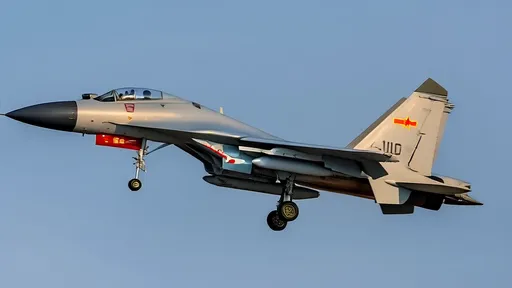
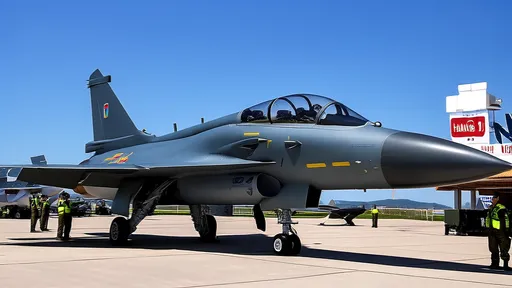
Thailand's defense media has been closely following the development and capabilities of China's Chengdu J-10C multirole fighter aircraft, frequently describing it as a formidable 4.5-generation combat platform. This classification places the J-10C in an intriguing position within the global fighter hierarchy, bridging the gap between legacy fourth-generation fighters and the nascent fifth-generation stealth aircraft. The Thai defense community's interest in the J-10C is not merely academic; it reflects a broader regional trend of modernizing air forces with advanced, cost-effective solutions that offer significant technological leaps without the prohibitive costs associated with full fifth-generation platforms like the F-35.
The J-10C, an evolution of the original J-10 "Vigorous Dragon," represents a substantial leap in avionics, sensor fusion, and weaponry. Thai analysts often highlight its active electronically scanned array (AESA) radar as a cornerstone of its 4.5-gen credentials. Unlike the mechanically scanned radars of previous generations, an AESA radar provides superior detection range, higher resolution, and the ability to track multiple targets simultaneously while engaging the most threatening ones. This capability, as noted in Thai defense publications, is a key differentiator, allowing the J-10C to hold its own against other modern fighters in the Asia-Pacific theater, such as the French Rafale or American F-16 Block 70/72.
Another aspect frequently dissected in Thai media is the aircraft's engine and airframe design. The transition to the WS-10B Taihang turbofan engine, a Chinese indigenous product, is seen as a critical step in achieving operational independence and enhancing performance. The engine provides greater thrust, improving the aircraft's thrust-to-weight ratio and enabling more energetic maneuvers. Combined with its aerodynamic canard-delta wing configuration, the J-10C is praised for its high agility and dogfighting potential. Thai reports suggest that this combination of raw power and nimble handling makes it a dangerous opponent within visual range combat, a scenario that remains a cornerstone of pilot training despite the increasing prevalence of beyond-visual-range (BVR) engagements.
The heart of the J-10C's 4.5-generation designation lies in its sophisticated sensor fusion and networked warfare capabilities. Thai defense journals explain that the aircraft's mission computer integrates data from a plethora of sources—its AESA radar, infrared search and track (IRST) system, electronic warfare suites, and datalinks—to present the pilot with a unified, coherent picture of the battlespace. This "sensor fusion" reduces pilot workload and accelerates decision-making, a crucial advantage in the high-tempo environment of modern air combat. The ability to network with other assets, such as airborne early warning and control (AEW&C) aircraft like the KJ-500, effectively turns the J-10C from a lone wolf into a key node in a larger, more lethal kill chain.
When it comes to armament, the J-10C's arsenal is a focal point for Thai analysis, underscoring its multirole versatility. The aircraft is compatible with the latest generation of Chinese precision-guided munitions. This includes the PL-15 beyond-visual-range air-to-air missile, which is often singled out for its exceptionally long range, posing a significant challenge to existing enemy aircraft and forcing adversaries to reconsider their tactics. For strike missions, the J-10C can carry a range of smart bombs and air-to-surface missiles like the YJ-91 anti-radiation missile, designed to destroy enemy air defenses. This diverse weapons package allows a single J-10C squadron to perform air superiority, interception, and precision strike missions, making it a highly flexible asset for any air force.
Thai commentators often draw comparisons between the J-10C and other prominent 4.5-generation fighters to contextualize its performance. It is frequently measured against the American F-16V Viper, the French Dassault Rafale, and the European Eurofighter Typhoon. While these analyses acknowledge the advanced craftsmanship and proven records of the Western counterparts, they also point out that the J-10C offers a compelling blend of high-end capabilities at a reportedly lower acquisition and operational cost. This cost-effectiveness is a recurring theme, positioning the J-10C as an attractive option for nations seeking to modernize their fleets without depleting their defense budgets.
Within the specific context of Southeast Asia, the potential introduction of an aircraft like the J-10C carries significant strategic weight. Thailand itself, a traditional user of American and Swedish aircraft, is constantly evaluating its options for air force modernization. Thai media speculate that the J-10C could be a serious contender for future procurement, offering a technological partnership with China and a platform that could potentially counterbalance the acquisitions of neighboring countries. The aircraft's capabilities would represent a quantum leap over Thailand's current fleet of F-5s and older F-16s, enhancing the kingdom's air defense and power projection capabilities considerably.
The operational deployment of the J-10C with the People's Liberation Army Air Force (PLAAF) is closely watched as a real-world validation of its capabilities. Thai observers note its regular patrols over the Taiwan Strait and the South China Sea, often shadowing foreign aircraft. These deployments are seen as proof of the aircraft's reliability and its central role in China's air defense network. Furthermore, its performance in large-scale exercises, where it has reportedly "defeated" PLAAF's own J-20 stealth fighters in certain scenarios, has bolstered its reputation. These exercises demonstrate that even in a world increasingly focused on stealth, a well-flown 4.5-generation fighter with superior sensors and long-range weapons remains an extremely potent force.
Looking forward, the discourse in Thai defense circles suggests that the J-10C will continue to be a benchmark for 4.5-generation fighter technology. Its ongoing upgrades, particularly in areas like sensor algorithms, electronic warfare resilience, and integration with unmanned systems, will likely keep it relevant for decades. For many air forces in the region and beyond, the aircraft represents a pragmatic and powerful solution. It offers a clear path to a modern, networked air combat capability without the staggering financial and logistical burdens of a fifth-generation fleet, making the "Vigorous Dragon" a formidable and influential dragon in the skies of the 21st century.

By /Oct 21, 2025
By /Oct 21, 2025

By /Oct 21, 2025
By /Oct 21, 2025

By /Oct 21, 2025

By /Oct 21, 2025

By /Oct 21, 2025

By /Oct 21, 2025

By /Oct 21, 2025

By /Oct 21, 2025

By /Oct 21, 2025

By /Oct 21, 2025

By /Oct 21, 2025
By /Oct 21, 2025

By /Oct 21, 2025

By /Oct 21, 2025

By /Oct 21, 2025

By /Oct 21, 2025

By /Oct 21, 2025
By /Oct 21, 2025