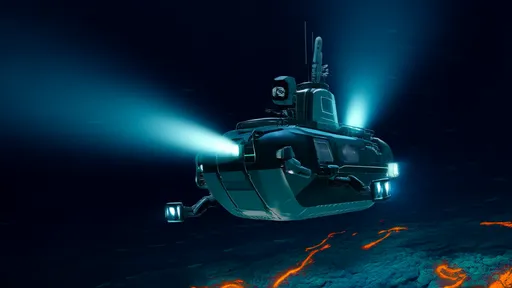
In the perpetual darkness of the ocean's deepest trenches, where pressures reach a thousand times that of the surface, a new era of exploration is unfolding. The development of full-ocean-depth manned submersibles represents one of humanity's most ambitious technological achievements, enabling direct human presence in the most inaccessible realms of our planet. These sophisticated vessels serve as mobile laboratories and observation platforms, bringing scientists face-to-face with environments that have remained mysterious since the dawn of time.
The journey to the ocean's deepest points requires engineering that pushes against the very limits of material science. The pressure at these depths exceeds 1,100 atmospheres, enough to crush conventional submarines like aluminum cans. Modern full-ocean-depth submersibles employ revolutionary designs, including spherical titanium alloy cabins that can withstand these incredible forces while protecting their human occupants. The development of syntactic foam buoyancy materials, advanced battery systems, and precision navigation equipment has transformed what was once considered impossible into operational reality.
What makes these missions particularly significant is the human element they introduce to deep-sea exploration. While robotic vehicles can collect samples and capture images, there's an irreplaceable quality to having trained scientists physically present at these extreme depths. The human eye can detect subtle color variations, recognize behavioral patterns, and make intuitive connections that might escape remote observation. This direct engagement has led to numerous breakthrough discoveries that might otherwise have remained hidden in the perpetual darkness.
Recent expeditions have revealed astonishing biological diversity in what were once considered marine deserts. Hydrothermal vent communities, previously unknown to science, thrive in complete darkness, deriving energy from chemical processes rather than sunlight. Giant tube worms, blind shrimp, and unique microbial communities have adapted to survive in environments that would be instantly lethal to most life forms. Each dive brings the potential for discovering new species and understanding the extreme limits of biological adaptation.
The geological insights gained from these missions are equally profound. Deep-sea trenches act as natural laboratories for studying plate tectonics and seismic activity. By directly observing subduction zones and collecting rock samples from the deepest points on Earth, scientists are developing better models for earthquake prediction and understanding planetary formation processes. The Mariana Trench, Challenger Deep, and other deep ocean features are providing crucial data about how our planet functions at its most fundamental level.
Environmental monitoring represents another critical application of full-ocean-depth capability. As human activity increasingly impacts even the most remote ocean regions, these submersibles serve as essential tools for assessing the health of deep-sea ecosystems. They enable scientists to track the spread of pollutants, study the effects of climate change on deep ocean currents, and establish baseline data for conservation efforts in areas that may soon face resource extraction pressures.
The technological innovations developed for these extreme environments often find applications beyond ocean exploration. Advanced pressure-resistant materials, underwater communication systems, and energy storage solutions developed for deep-sea missions have spun off into medical devices, aerospace engineering, and renewable energy technologies. The challenge of operating in such hostile conditions drives innovation across multiple scientific and engineering disciplines.
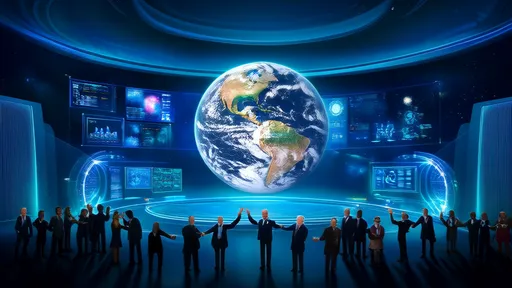
International collaboration has become a hallmark of deep-sea exploration programs. Scientists from multiple nations often share resources, data, and expertise, recognizing that the challenges of exploring the deep ocean transcend political boundaries. This spirit of cooperation has accelerated progress while ensuring that the knowledge gained benefits all humanity. The deep ocean, much like outer space, is increasingly viewed as a common heritage requiring shared stewardship.
Education and public engagement form another vital dimension of these programs. Live feeds from deep-sea missions capture public imagination, while educational programs inspire the next generation of ocean scientists and engineers. The stunning imagery and video captured during dives help communicate the importance of ocean conservation to broader audiences, fostering greater appreciation for these fragile ecosystems.
Looking toward the future, the next generation of full-ocean-depth submersibles promises even greater capabilities. Longer dive times, enhanced scientific instrumentation, and improved maneuverability will open new frontiers in deep-sea research. Plans for permanent underwater observatories and more extensive mapping missions suggest that we are only beginning to understand the potential of these technological marvels.
The economic implications of deep-sea exploration are becoming increasingly significant. While mineral resources in deep-sea environments present both opportunities and challenges, the biological discoveries may prove even more valuable. Unique enzymes from deep-sea organisms already show promise for medical applications, while extreme-environment adaptations may inspire new industrial processes and materials.
Despite the tremendous progress, significant challenges remain. The high costs of development and operation limit access to these technologies, while the technical difficulties of working at such depths continue to push engineers to innovate. Safety considerations remain paramount, requiring redundant systems and rigorous testing protocols to protect human lives in these unforgiving environments.
As we continue to explore Earth's final frontier, each mission deepens our understanding of planetary processes and biological resilience. The data collected during these dives contributes to climate models, informs conservation strategies, and expands our knowledge of life's incredible adaptability. The deep ocean, once considered a barren wasteland, is revealing itself as a realm of astonishing complexity and beauty.
The legacy of full-ocean-depth exploration extends beyond scientific discovery to how we perceive our relationship with the natural world. By demonstrating that life thrives even in the most extreme conditions, these missions reshape our understanding of what constitutes a habitable environment. This perspective becomes increasingly important as we search for life beyond Earth and confront environmental challenges here at home.
In the coming decades, as technology advances and international cooperation deepens, full-ocean-depth manned submersibles will continue to serve as humanity's ambassadors to the deep. They represent not just technological achievement, but the enduring human drive to explore, understand, and protect our remarkable planet in all its depth and diversity.
By /Oct 21, 2025

By /Oct 21, 2025
By /Oct 21, 2025
By /Oct 21, 2025

By /Oct 21, 2025
By /Oct 21, 2025

By /Oct 21, 2025

By /Oct 21, 2025
By /Oct 21, 2025
By /Oct 21, 2025

By /Oct 21, 2025

By /Oct 21, 2025

By /Oct 21, 2025

By /Oct 21, 2025
By /Oct 21, 2025

By /Oct 21, 2025

By /Oct 21, 2025

By /Oct 21, 2025
By /Oct 21, 2025

By /Oct 21, 2025