The global waste crisis has reached a tipping point, with food waste alone accounting for nearly one-third of all human-generated greenhouse gas emissions. As landfills overflow and traditional disposal methods prove increasingly unsustainable, scientists and entrepreneurs are turning to an unlikely hero in the waste management revolution: the black soldier fly (Hermetia illucens). This unassuming insect is demonstrating an extraordinary capacity to transform food waste into high-value protein while addressing multiple environmental challenges simultaneously.
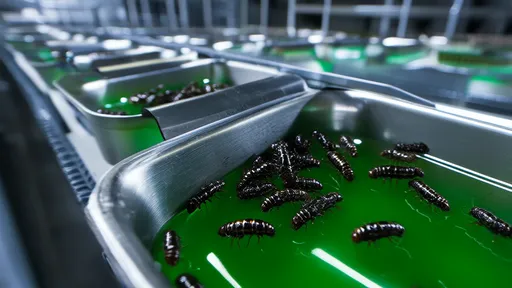
Black soldier fly larvae (BSFL) possess a ravenous appetite that would put most competitive eaters to shame. These wriggling creatures can consume twice their body weight in organic matter daily, processing everything from rotting vegetables to meat scraps with equal enthusiasm. What makes them truly remarkable isn't just their eating habits, but their biological alchemy - converting low-value waste into nutrient-rich biomass. The resulting protein contains all essential amino acids and boasts a nutritional profile comparable to fishmeal, the gold standard in animal feed.
The environmental implications of this process are staggering. Traditional composting releases significant amounts of methane, a greenhouse gas 25 times more potent than carbon dioxide. In contrast, black soldier fly larvae digestion produces minimal emissions while preventing organic waste from reaching landfills. The larvae's gut microbiome appears to neutralize harmful pathogens, including salmonella and E. coli, effectively sanitizing the waste stream. This dual action of waste reduction and biological safety creates a closed-loop system that could revolutionize how cities manage organic waste.
Commercial operations are already scaling this technology with impressive results. A single mid-sized facility processing 100 metric tons of food waste daily can produce approximately 15 tons of dried protein meal while reducing the original waste volume by up to 75%. The economics are compelling - waste processors not only eliminate disposal fees but generate revenue from selling the protein byproducts. Poultry farms and aquaculture operations are particularly eager customers, as BSFL protein offers a sustainable alternative to increasingly expensive and environmentally destructive fishmeal.
Beyond protein production, the black soldier fly lifecycle yields multiple valuable co-products. The insect's oil, rich in lauric acid, shows promise as a biodiesel feedstock and cosmetic ingredient. Chitin extracted from the exoskeletons has applications in water purification, medical dressings, and biodegradable plastics. Even the frass (insect manure) serves as an exceptional organic fertilizer, completing the circular economy model. This multi-stream output makes BSFL operations financially viable without relying solely on protein sales.
The technology's adaptability shines in diverse global contexts. In Southeast Asia, small-scale farmers use simple mesh enclosures to cultivate larvae for chicken feed. European startups are building automated vertical farms that process supermarket waste. African social enterprises train communities to establish insect farms using local agricultural byproducts. This scalability - from rural homesteads to industrial facilities - makes BSFL technology uniquely positioned to address both waste management and food security challenges worldwide.
Regulatory landscapes are evolving to accommodate this emerging industry. The European Union approved BSFL protein for aquaculture in 2017 and poultry feed in 2021, with other regions following suit. Food safety agencies continue to study the potential for human consumption, as the protein's nutritional density could help address global malnutrition. Meanwhile, forward-thinking cities are integrating black soldier fly systems into municipal waste management plans, recognizing their potential to meet sustainability targets.
Challenges remain in optimizing and mainstreaming this technology. Automated separation systems for harvesting larvae need refinement to reduce labor costs. Genetic research aims to enhance the larvae's waste-processing efficiency and nutritional output. Perhaps most crucially, public perception must overcome the "ick factor" associated with insect farming. Educational initiatives highlighting the environmental benefits and food safety standards are gradually shifting attitudes, particularly among younger, eco-conscious consumers.
The black soldier fly phenomenon represents more than just an innovative waste solution - it exemplifies the paradigm shift toward circular bioeconomy models. By viewing waste as a resource and harnessing natural biological processes, this technology offers a template for sustainable industrialization. As climate change accelerates and global protein demand grows, these unassuming insects may well become the unsung heroes of our planetary rescue mission, proving that sometimes the most transformative solutions come in small, wriggling packages.
By /Aug 12, 2025

By /Aug 12, 2025

By /Aug 12, 2025
By /Aug 12, 2025
By /Aug 12, 2025
By /Aug 12, 2025

By /Aug 12, 2025

By /Aug 12, 2025

By /Aug 12, 2025
By /Aug 12, 2025
By /Aug 12, 2025
By /Aug 12, 2025

By /Aug 12, 2025
By /Aug 12, 2025
By /Aug 12, 2025

By /Aug 12, 2025

By /Aug 12, 2025
By /Aug 12, 2025

By /Aug 12, 2025
By /Aug 12, 2025