Chinese Swallow's Nest Protection: Ecological Compatibility of Traditional Architecture

Aug 12, 2025 By

In the heart of China's ancient towns and bustling cities, a quiet revolution is taking place—one that bridges centuries-old architectural traditions with modern ecological consciousness. The preservation of swallow nests in traditional Chinese buildings has emerged as an unexpected yet profound symbol of this harmony. For generations, swallows have built their mud nests under the eaves of wooden houses, temples, and courtyard dwellings, becoming inseparable from the cultural landscape. Today, as China grapples with rapid urbanization, these delicate avian structures have become testaments to how heritage conservation and biodiversity protection can intertwine.

The swallow's intimate relationship with Chinese architecture spans over a millennium, documented in classical poetry and folk proverbs. These agile birds favor the overhanging roofs and wooden beam structures characteristic of traditional Chinese buildings, finding perfect shelter from rain and predators. Unlike modern concrete structures with smooth surfaces, aged wooden eaves provide ideal texture for nest adhesion. During spring migrations, returning swallows often reclaim their ancestral nests—some occupied by successive generations for decades. This phenomenon created what scholars call "living heritage," where human craftsmanship and natural processes collaborate across species boundaries.

Local wisdom long recognized swallows as beneficial neighbors. Farmers appreciated their insect-control services, while cultural traditions associated them with good fortune. Many villages maintained unspoken rules against disturbing nests, even when repairing houses. This informal protection system began fracturing during China's construction boom, when countless old buildings made way for glass-and-steel towers. Conservationists noticed alarming swallow population declines in urban areas—a silent casualty of architectural homogenization.

Recent years witnessed grassroots efforts to integrate swallow habitats into heritage conservation projects. In Zhejiang province's water towns, craftsmen repairing Ming Dynasty-era roofs now carefully preserve existing nests and even create artificial ledges to encourage new ones. The technique involves mixing traditional mortar with special adhesives that mimic natural mud composition. Some communities have installed miniature cameras near nests, allowing residents and tourists to observe nesting cycles without disturbance—an innovative blend of tradition and technology.

This movement gained institutional support when several provinces incorporated swallow-friendly measures into official heritage guidelines. The 2021 renovation of a 300-year-old merchant's residence in Anhui became a landmark case. Architects designed custom drainage systems to prevent rainwater from damaging nests while maintaining structural authenticity. Such projects demonstrate how minor adaptations can achieve ecological compatibility without compromising historical accuracy.

Beyond physical preservation, swallow nests have inspired cultural revival. In Shandong's countryside, elderly artisans teach youth traditional methods of constructing "swallow-friendly" eaves using interlocking wooden brackets that minimize metal nails. These workshops often incorporate folk stories about human-swallow coexistence, strengthening community bonds to both architectural and natural heritage. Meanwhile, urban designers study ancient nest locations to inform green building placements, proving that historical patterns hold solutions for modern sustainability challenges.

The phenomenon also reveals unexpected economic benefits. Villages promoting "swallow tourism" report increased visitor numbers during nesting seasons. A Fujian tea merchant credits swallows nesting in his ancestral home's warehouse for improving tea leaf quality—the birds control pests better than pesticides while their droppings fertilize surrounding soil. Such cases build compelling arguments for preserving these symbiotic relationships in commercial contexts.

Scientific research now validates traditional practices. Ornithologists discovered that nests in historic buildings show higher reproductive success rates than those in modern structures. The thermal properties of aged wood help regulate nest temperatures, while the slight sway of traditional roofs in wind may strengthen nestlings' bones. These findings prompted some new eco-developments to incorporate design elements from ancient architecture, creating a feedback loop where biological insights inform contemporary construction.

Challenges persist, particularly in balancing conservation with practical needs. Nest debris can damage valuable wood carvings, requiring innovative cleaning methods. Some homeowners remain reluctant due to noise and mess, though education campaigns highlighting swallows' mosquito-control abilities have changed many minds. Legal protections remain patchwork, with swallow nests enjoying indirect coverage under cultural relic laws rather than explicit wildlife statutes.

As China's National Cultural Heritage Administration begins drafting new guidelines for ecological compatibility in heritage sites, the humble swallow nest stands as both metaphor and model. These delicate mud structures remind us that true preservation extends beyond physical buildings to encompass the intricate web of life they support. In an era of climate crisis, the marriage of traditional architecture and wildlife conservation offers hope—proof that human habitats can nurture rather than displace nature.

The story of China's swallow nests ultimately transcends ornithology or architecture. It represents a philosophical shift toward recognizing cultural heritage as inherently ecological. As one craftsman in Jiangxi remarked while repairing a nest-dotted eave: "These aren't just bird homes—they're memories in clay, proof that our ancestors built with more than just human needs in mind." In protecting these fragile creations, China rediscovers the wisdom of buildings that breathe with life, where every beam and tile acknowledges its place within a larger living system.
Recommend Posts
Animal

Sydney's Cockatoos: Deciphering Traffic Light Cracking Behavior"

By /Aug 12, 2025

In the bustling urban landscapes of Sydney, an unexpected intelligence has been observed among the local sulphur-crested cockatoos. These striking white birds, known for their raucous calls and playful antics, have demonstrated a remarkable ability to manipulate traffic signals to their advantage. This behavior, which involves carefully prying open traffic light casings to access food, has left scientists and city officials both fascinated and perplexed.
Animal

Chinese Swallow's Nest Protection: Ecological Compatibility of Traditional Architecture

By /Aug 12, 2025

In the heart of China's ancient towns and bustling cities, a quiet revolution is taking place—one that bridges centuries-old architectural traditions with modern ecological consciousness. The preservation of swallow nests in traditional Chinese buildings has emerged as an unexpected yet profound symbol of this harmony. For generations, swallows have built their mud nests under the eaves of wooden houses, temples, and courtyard dwellings, becoming inseparable from the cultural landscape. Today, as China grapples with rapid urbanization, these delicate avian structures have become testaments to how heritage conservation and biodiversity protection can intertwine.
Animal

Economic Transformation of Tashirojima: Japan's Cat Island Tourism

By /Aug 12, 2025

The tiny island of Tashirojima, nestled in the Pacific waters off Japan’s Miyagi Prefecture, has long been a quiet fishing community. But in recent years, it has gained international fame under a different moniker: Cat Island. With a feline population that far outnumbers its human residents, Tashirojima has transformed from an obscure outpost into a thriving tourist destination, drawing visitors from around the world who come to witness its unique cat-centric culture. This shift hasn’t just put the island on the map—it has revitalized its economy, offering a fascinating case study in how niche tourism can breathe new life into declining rural areas.
Animal

Hippopotamus Sweat: A New Source for Antimicrobial Drugs

By /Aug 12, 2025

The medical community is abuzz with an unexpected discovery that could revolutionize antibiotic development. Researchers have identified potent antimicrobial compounds in an unlikely source: hippopotamus sweat. This thick, reddish secretion long dismissed as a mere sunblock or thermoregulator now emerges as nature's sophisticated pharmacy, containing molecules that defy conventional antibiotic resistance mechanisms.
Animal

Cow Magnetic Sense Navigation: Pasture Geomagnetic Memory Phenomenon

By /Aug 12, 2025

For decades, farmers and biologists have noticed an odd phenomenon—cows tend to align themselves along north-south axes while grazing or resting. At first glance, this might seem like mere coincidence, but a growing body of research suggests something far more intriguing: cattle may possess an innate ability to sense Earth’s magnetic field, using it as a navigational guide. This behavior, known as magnetic alignment, has sparked debates among scientists, with some proposing that cows, like migratory birds or sea turtles, might rely on magnetoreception to orient themselves in their environment.
Animal

Hong Kong Wild Boar Management: Design of Intelligent Lid-Flipping Trash Bins

By /Aug 12, 2025

Hong Kong’s wild boar population has become a growing concern for both residents and authorities in recent years. As urban expansion encroaches on natural habitats, encounters between humans and these animals have increased dramatically. One unexpected consequence of this conflict is the rise of wild boars raiding residential areas in search of food, particularly from improperly secured trash bins. In response, the city has begun experimenting with an innovative solution: smart flip-top trash bins designed to deter wildlife while maintaining convenience for users.
Animal

Koala Brain Reduction: An Evolutionary Compromise for Low-Energy Survival

By /Aug 12, 2025

The koala, an iconic marsupial native to Australia, has long fascinated scientists with its unique adaptations to a highly specialized diet of eucalyptus leaves. Among its most intriguing evolutionary trade-offs is the phenomenon of brain shrinkage—a remarkable example of energy conservation in nature. This physiological compromise raises profound questions about the relationship between cognitive capacity and survival strategies in extreme ecological niches.
Animal

Otter Alliance of Singapore: Canal Divisions of Family Territories

By /Aug 12, 2025

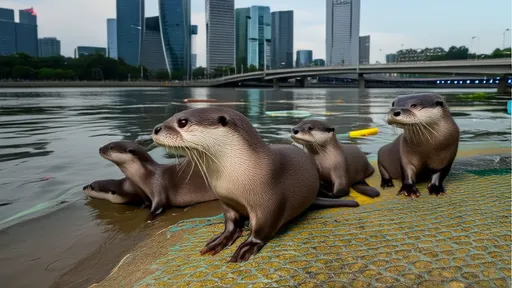
The bustling city-state of Singapore is known for its gleaming skyscrapers, efficient public transport, and lush green spaces. But beneath its urban veneer lies a thriving ecosystem where an unexpected creature has carved out a niche—the smooth-coated otter. These charismatic mammals have not only adapted to city life but have also established complex social structures, complete with family territories demarcated by the city’s extensive canal network. The Singapore Otter Working Group, a coalition of researchers and wildlife enthusiasts, has been meticulously documenting these behaviors, revealing a fascinating interplay between urban infrastructure and wildlife.
Animal

Coral Gene Bank: Preservation of Acid-Resistant and Thermotolerant Strains

By /Aug 12, 2025

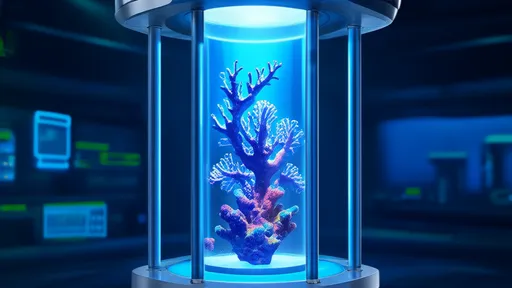
The world's coral reefs are facing unprecedented threats from climate change, with rising ocean temperatures and acidification pushing these fragile ecosystems to the brink. In response to this crisis, scientists have turned their attention to preserving the genetic diversity of corals through specialized gene banks. Among the most critical collections are acid- and heat-tolerant coral strains, which may hold the key to reef survival in an increasingly hostile marine environment.
Animal

Animal Digital Twins: Management of Virtual Nature Reserves

By /Aug 12, 2025

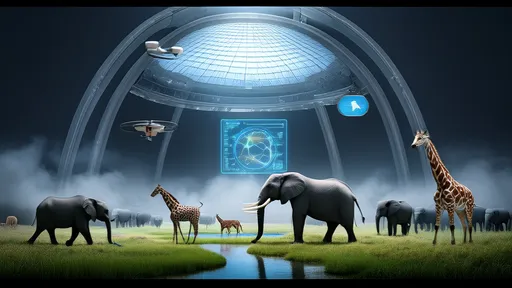
The concept of digital twinning has transcended industrial applications and found profound relevance in wildlife conservation. Animal digital twins represent a groundbreaking approach to species preservation, creating dynamic virtual models that mirror real animals in protected habitats. This technological innovation is reshaping how conservationists monitor, understand, and safeguard endangered species without intrusive physical interventions.
Animal

Hanuman's Dilemma: The Ecological Conflict of Urban Monkey Populations

By /Aug 12, 2025

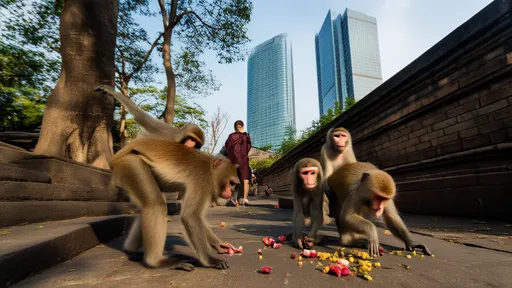
In the bustling cities of India, a unique ecological dilemma unfolds daily on rooftops, temples, and crowded marketplaces. The revered Hanuman langur, celebrated in Hindu mythology as the divine monkey god Hanuman's progeny, has become an unexpected urban dweller. These agile creatures, once confined to forest canopies, now navigate concrete jungles with startling adaptability, creating complex intersections between human civilization and wildlife.
Animal

Squirrel Memory Enhancement: Neural Encoding of Spatial Maps

By /Aug 12, 2025

The autumn forest hums with activity as grey squirrels dart between branches, burying acorns with remarkable precision. What appears as simple instinct is actually an extraordinary feat of neural computation. Recent breakthroughs in neuroscience reveal that squirrels possess a sophisticated spatial memory system rivaling that of laboratory rodents, offering surprising insights into how mammalian brains construct mental maps.
Animal

Octopus Tentacle Taste: A Decentralized Sensing System for Feeding

By /Aug 12, 2025

The ocean's depths hold countless mysteries, but few are as fascinating as the cephalopod's approach to dining. Unlike any land-dwelling creature, octopuses possess a radical decentralized nervous system that extends beyond their brains—quite literally into their arms. This biological marvel allows each of their eight limbs to "taste" and react to their environment independently while foraging. Recent studies reveal this distributed sensory network operates with startling sophistication, blurring the line between touch and chemical perception in ways that could revolutionize soft robotics and adaptive AI systems.
Animal

Dutch Dairy Economy: The Biological Basis of Cheese Culture

By /Aug 12, 2025

The Netherlands, often referred to as the "Land of Cheese," has built an entire economy around its dairy prowess. At the heart of this lies a fascinating interplay between biology, tradition, and commerce. Dutch cows, grazing on lush polders, produce milk that is transformed into world-renowned cheeses like Gouda and Edam. But what makes this system so unique isn’t just the end product—it’s the deeply rooted biological and cultural foundations that have sustained it for centuries.
Animal

New York Peregrine Falcons Hunting: Utilizing Glass Curtain Wall Reflections

By /Aug 12, 2025

New York City’s skyline, a glittering maze of steel and glass, has long been a symbol of human ingenuity. But for one unlikely resident—the peregrine falcon—these towering structures have become an unexpected ally in the art of hunting. Recent observations by urban wildlife researchers reveal how these apex predators have adapted to the challenges of city life, turning the reflective surfaces of glass-clad skyscrapers into tools for ambushing prey.
Animal

Urban Foxes in London: Evolution of Trash Bin Lid-Opening Skills

By /Aug 12, 2025

The streets of London have long been shared by humans and a more unexpected resident: the urban fox. Over the past few decades, these cunning creatures have not only adapted to city life but have also developed remarkable skills to thrive in an environment dominated by concrete and humans. Among their most impressive feats is their ability to open trash bins—a behavior that has evolved rapidly, showcasing their intelligence and adaptability.
Animal

Resurrecting Extinct Species: Bottlenecks in Cloning Thylacine Technology

By /Aug 12, 2025

The dream of resurrecting extinct species has long captured the imagination of scientists and the public alike. Among the most iconic candidates for de-extinction is the thylacine, or Tasmanian tiger, a marsupial predator that once roamed the wilds of Australia and Tasmania before being hunted to extinction in the early 20th century. Recent advances in genetic engineering and cloning technologies have sparked hope that the thylacine could one day walk the earth again. However, despite the enthusiasm surrounding this possibility, significant scientific hurdles remain, particularly in the realm of cloning technology.
Animal

Black Soldier Fly Protein: The Transformation Revolution of Food Waste

By /Aug 12, 2025

The global waste crisis has reached a tipping point, with food waste alone accounting for nearly one-third of all human-generated greenhouse gas emissions. As landfills overflow and traditional disposal methods prove increasingly unsustainable, scientists and entrepreneurs are turning to an unlikely hero in the waste management revolution: the black soldier fly (Hermetia illucens). This unassuming insect is demonstrating an extraordinary capacity to transform food waste into high-value protein while addressing multiple environmental challenges simultaneously.
Animal

Egyptian Scarab: The Astronomical Metaphor of Dung Ball Rolling

By /Aug 12, 2025

The humble scarab beetle, known scientifically as Scarabaeus sacer, has long fascinated both ancient civilizations and modern scientists. In the sun-baked deserts of Egypt, this unassuming creature became a powerful symbol of cosmic order, rebirth, and the eternal cycle of life. But what is it about the scarab’s seemingly mundane habit of rolling dung that elevated it to such divine status? The answer lies in an extraordinary astronomical metaphor woven into the fabric of ancient Egyptian spirituality.
Animal

Acoustic Ecological Monitoring: The Stethoscope of Forest Health

By /Aug 12, 2025

The rustling leaves, the distant call of a bird, the subtle hum of insects—these are the sounds that compose the symphony of a healthy forest. But what if these auditory cues could tell us more than just the presence of life? What if they could serve as a diagnostic tool, a stethoscope for forest health? This is the premise behind acoustic ecological monitoring, an emerging field that listens to ecosystems to assess their vitality and detect early signs of degradation.